Entry · Ref DGHE_-DA
Plumber Near Me: Why Licensed Journey Workers and Master Plumbers Matter
- Posted
- 2026-09-26
- Last amended
- 2026-09-26
- Account
- @simonzksv826
When someone types plumber near me into a search bar, the immediate problem usually feels simple. There is water where it should not be, a drain that will not move, a water heater that has gone cold, or a business that cannot afford another hour of downtime. In that moment, most people are not thinking about licensing categories, state oversight, or code updates. They are thinking about speed.
Speed matters. So does who actually shows up.
In Hawaii, plumbing is a licensed profession. A person may not act or hold themselves out as a plumber without a license, and plumbing work generally must be done by a licensed journey worker plumber or master plumber. Apprentices and helpers can be part of the crew, but they work under supervision. That distinction is not red tape for its own sake. It is the line between trained, accountable work and work that only looks acceptable until the wall is closed up, the slab is poured, or the leak returns.
That becomes even more important in places like West Hawaii, where homeowners and property managers may be searching for a plumber Kona residents can rely on for everyday service, urgent repairs, and commercial work. Local providers advertise everything from drain cleaning and water heater repair to sewer line repair, leak detection, solar water systems, and commercial plumbing installation. Those jobs are not interchangeable, and neither are the people performing them.
The difference between a name on a truck and a licensed plumber
A lot of confusion starts with job titles. People use the word plumber loosely. They may mean a company, a technician, a contractor, or simply the person who answers the phone and promises to send help. Under Hawaii law, that casual use can mask a serious issue, because plumbing work is not supposed to be carried out by just anyone willing to take the job.
A licensed journey worker plumber has met the state requirements to perform plumbing work. A master plumber is a higher level of licensure and responsibility. The exact value to a customer is practical, not abstract. It means the work is being done by someone the state recognizes as qualified to do it.
That matters because plumbing systems are connected systems. A mistake at one fixture can affect pressure, drainage, sanitation, or safety elsewhere. A poor repair on a water line can damage framing and finishes. A bad connection at a heater can leave a household without hot water. An improperly handled drain issue can turn a nuisance into a contamination problem. On the commercial side, the consequences multiply quickly because business plumbing serves more people, more fixtures, and often more complex layouts.
If you are hiring a commercial plumber for a tenant space, restaurant, office, or mixed use property, the stakes are higher still. Delays and corrections cost money, and once inspections or occupancy issues enter the picture, the cheapest bid can become the most expensive decision in the room.
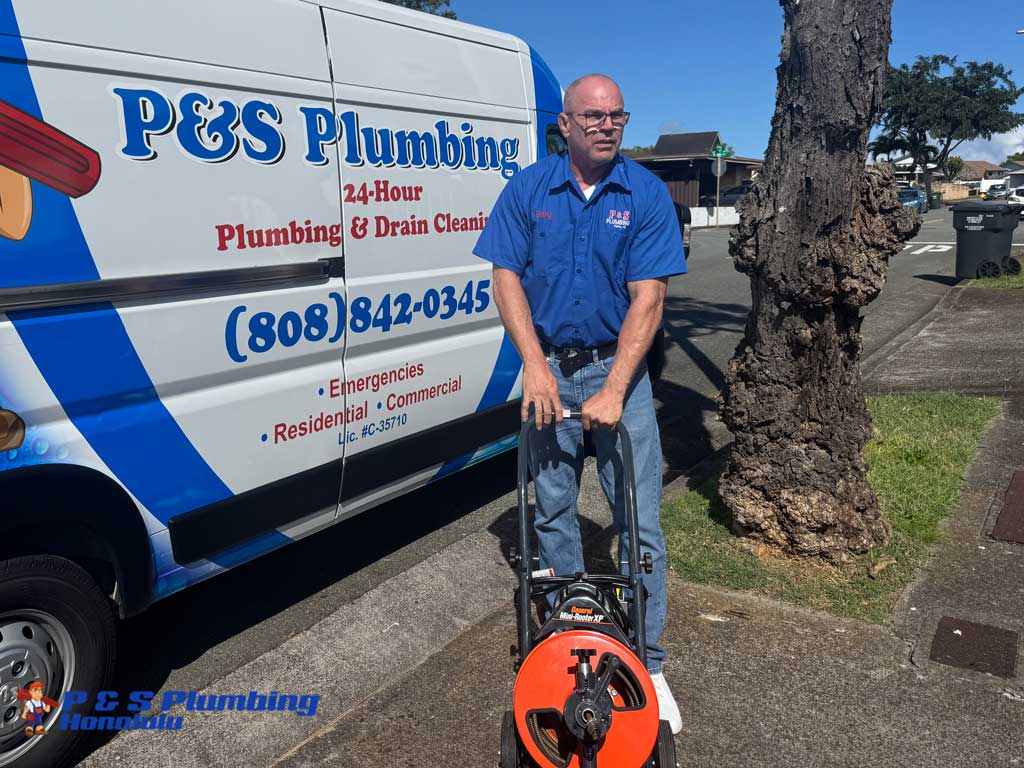
Why Hawaii’s rules are stricter than many people realize
One of the most overlooked facts in Hawaii is that the law does allow a narrow emergency repair exception for plumbing work in a person’s principal residence. On paper, that sounds broad enough to make some homeowners think they can handle almost anything in a pinch or hire whoever happens to be available. The actual exception is much tighter.
It does not apply to sewer lines, drains, gas lines, or certain fixtures including heaters and water closets. That means many of the jobs people most commonly search for in a hurry are outside the scope of that emergency carveout. If the issue involves sewer line repair, drain cleaning, a heater, or gas-related plumbing, the safe assumption is that this is not the category for improvised work or unlicensed labor.

That legal structure tells you something important about risk. The state did not carve out the simpler, more limited emergency repair allowance and then leave the more serious systems unrestricted. It did the opposite. The more consequential and technically sensitive the work, the less room there is for shortcuts.
This is especially relevant when a customer is under stress and searching for an emergency plumber. The urgency of the situation can make people drop their normal standards. They stop asking who is licensed, who supervises the work, and who is actually touching the system. Yet emergencies are exactly when qualifications matter most, because rushed decisions are where hidden damage begins.
A licensed contractor is not the same thing as unlicensed hands doing the work
Another point that often gets missed is the relationship between the contractor and the workers on site. Hawaii’s Department of Commerce and Consumer Affairs makes clear that plumbing contractors must employ licensed plumbers to perform the actual work. That is not a minor administrative detail. It is part of how state oversight works.
For the customer, this means the company name alone should not be the end of the conversation. A business can advertise plumbing services, schedule plumbing work, and present itself professionally, but the key question is still whether licensed journey workers or master plumbers are performing the actual plumbing.
That distinction matters in both residential and commercial jobs. A homeowner calling about water heater repair may assume that anyone dispatched by a plumbing company is a licensed plumber. A property manager arranging commercial plumbing installation may assume the same. The law is built on the opposite principle: not everyone on a job site is automatically authorized to do the trade work independently.
Apprentices and helpers are part of the industry, and they are necessary. Trades do not continue without training the next generation. The issue is supervision. Proper supervision protects the customer and the worker. It keeps a learner from being placed in a situation where they are making decisions they are not yet licensed to make on their own.
Why continuing competency is not just bureaucracy
Licensing is not only about getting qualified once. It is also about staying current. Hawaii currently requires plumber license renewal continuing competency in the 2021 Uniform Plumbing Code for the renewal cycle ending June 30, 2027.
That point deserves more attention than it usually gets.
Codes evolve because materials, installation practices, and safety expectations evolve. In the real world, plumbing is not a static craft frozen in time. The basics remain, but details matter. A licensed plumber who is required to maintain competency is working within a system that expects current knowledge, not outdated habits.
For customers, that has practical value in both obvious and subtle ways. It matters when planning new work. It matters when replacing fixtures. It matters when evaluating what can be repaired and what should be redone. It matters when a project touches wastewater systems, because Hawaii wastewater guidance notes that some property wastewater projects may also require a licensed plumber and or electrician depending on scope. Once a job crosses into broader system work, code knowledge is not optional.
People often notice plumbing only when it fails. Professionals notice the standards behind the walls and under the slab, because those standards determine whether a repair lasts and whether future work becomes simpler or harder.
The jobs that look routine but are not
Many service calls sound ordinary when described over the phone. That can create a false sense of simplicity.
Take water heater repair. It sounds straightforward because the equipment is familiar. Yet Hawaii’s own emergency repair exception specifically does not apply to heaters. That alone should reset the conversation. If the law treats heater work as something outside a do it yourself emergency allowance, customers should take the hint. Whether the issue is no hot water, leaking at the unit, or replacement planning, this is licensed plumbing territory.
The same goes for solar water heater repair. In West Hawaii, solar hot water systems are part of the local service landscape, and local business listings show providers advertising solar water heating work. Customers should assume this requires careful diagnosis and proper trade oversight. A solar hot water system is still part of the broader plumbing picture, and a bad repair can leave a household with recurring performance issues rather than a true fix.
Then there is drain cleaning. People routinely underestimate drain problems because a clog seems like a simple blockage. Sometimes it is. Sometimes it is not. Hawaii law’s emergency exception does not cover drains, which is a strong reminder that drain issues can involve more than convenience. A stopped drain can point to a localized obstruction, a broader system problem, or a condition that needs a licensed professional’s judgment before anyone starts disassembling, snaking, or opening lines without a plan.
sewer line repair is even more obvious, yet customers under pressure still look for the fastest low cost option. Sewer lines are specifically excluded from the emergency homeowner exception. That is exactly the kind of work where missteps can become expensive very quickly.
Why commercial work raises the bar
Commercial plumbing deserves its own discussion because the difference between residential and commercial work is not just scale. It is accountability, scheduling pressure, public use, and coordination with other trades.
A commercial plumber may be called for tenant improvements, fixture replacement, service restoration, or commercial plumbing installation tied to a larger buildout. In these settings, a plumbing delay can affect inspections, opening dates, staff operations, and customer experience. If the work is wrong, everyone downstream pays for it.
Commercial properties also tend to expose weak workmanship faster. Higher usage reveals drainage flaws, fixture problems, and installation shortcuts that might take longer to show up in a single family home. That is one reason licensing and supervision matter so much in commercial settings. Qualified trade labor is not a branding detail. It is part of risk control.
Property owners and managers often learn this the hard way. A job can look complete and still create trouble if it was not performed by the right licensed personnel. By the time the problem becomes visible, the tenant is frustrated, the schedule is blown, and the repair is now a correction.

What homeowners in Kona should actually look for
When people search for a plumber near me or a plumber Kona residents recommend, they often compare response times, availability, and price first. Those are fair concerns, but they should not come before basic qualification.
The better approach is to start with a few direct questions:
- Will the plumbing work be performed by a licensed journey worker plumber or master plumber?
- If apprentices or helpers are involved, how is the work supervised?
- Is the company operating under Hawaii’s contractor licensing requirements for plumbing work?
- Does the scope include items that clearly require licensed plumbing, such as heater work, drains, or sewer lines?
- For commercial or wastewater related work, are any additional licensed trades required based on the scope?
Those questions are not aggressive. They are normal. A reputable company should be prepared to answer them plainly.
Notice what is not on that list. There is nothing about glossy marketing, vague promises, or who can arrive fastest without discussing scope. An emergency plumber can and should move quickly, but speed without qualification is not service. It is a gamble.
The cost question, and why cheap plumbing is often expensive plumbing
Price always enters the conversation, and it should. Customers have budgets. Property owners have operating costs. Businesses have margins. But plumbing is one of those trades where low price can hide high risk.
A cheaper option may mean the work is not being done by the licensed level of personnel customers assume they are paying for. It may mean poor supervision. It may mean a narrow patch instead of a durable repair. It may also mean the customer is not getting the benefit of current code competency.
That does not mean the highest price is automatically the best. It means the estimate should be read in light of who is doing the work and what legal and technical responsibility they actually carry.
There is also a practical difference between a service call and a system issue. A modest fix handled correctly by a licensed plumber is often the least expensive path over time. A bargain repair on a drain, heater, or sewer problem can become a repeat visit, then a bigger repair, then a replacement. By then, the original https://trevorapph423.lakeviewbrief.com/posts/commercial-plumber-selection-tips-for-hawaii-companies savings are gone.
When urgency clouds judgment
Plumbing problems have a way of collapsing decision time. Water spreads. Tenants call repeatedly. A business cannot open. The temptation is to say yes to the first person available.
That is where many avoidable mistakes happen.
If the issue falls into categories Hawaii clearly treats as licensed plumbing work, and many urgent issues do, then the right response is not just fast help. It is fast, properly licensed help. This is especially true for heater failures, drain stoppages, sewer trouble, and commercial problems where the consequences of poor work are immediate.
Customers should also remember that state rules exist to protect the public from exactly the sort of corner cutting that becomes common during emergencies. The law does not relax because the customer is under pressure. If anything, the legal structure becomes more relevant when urgency rises.
Why this matters beyond the repair itself
Hiring a licensed plumber is not only about today’s problem. It affects what happens next.
If a repair is done correctly by licensed personnel, the next technician has a fair chance of understanding the system and building on proper work. If a contractor plans future improvements, the project starts from a cleaner baseline. If a property is sold, renovated, or inspected later, fewer unpleasant surprises tend to emerge.
That continuity matters in residential properties and even more in commercial ones. A properly handled commercial plumbing installation is not just about getting through today’s schedule. It supports the long life of the space. A sound water heater repair is not just about restoring hot water tonight. It reduces the chance that the same issue returns because someone treated a system problem like a quick cosmetic fix.
The same principle applies to solar water heater repair, drain cleaning, and sewer line repair. These are not isolated chores. They are interventions in systems that people depend on daily.
A better standard for choosing a plumber
The phrase plumber near me is a starting point, not a decision. The better standard is simpler and stronger: find the nearest qualified professional whose work matches the law, the scope, and the stakes.
In Hawaii, that means understanding that plumbing is a licensed trade, that actual plumbing work generally must be done by licensed journey workers or master plumbers, that apprentices and helpers work under supervision, and that narrow homeowner emergency exceptions do not cover many of the problems people most urgently want fixed. It also means recognizing that licensed contractors are expected to employ licensed plumbers for the actual trade work, and that continuing competency in the plumbing code is part of staying current in the field.
For homeowners in West Hawaii and businesses looking for a commercial plumber, those are not technicalities. They are the practical standards that separate dependable work from risky improvisation.
When the call is for an emergency plumber, when the need is water heater repair, when the issue points toward drain cleaning or sewer line repair, or when a project involves commercial plumbing installation, the question is not just who can come. The better question is who is legally qualified, properly supervised, and professionally prepared to do the work right.
Name: P&S Plumbing Kona
Address: 73-5573 Kauhola St Bay #11, Kailua-Kona, HI 96740, United States
Phone: 808-325-3892
Website: https://www.psplumbinghawaii.com/
Email: [email protected]
Hours:
Sunday: Open 24 hours
Monday: Open 24 hours
Tuesday: Open 24 hours
Wednesday: Open 24 hours
Thursday: Open 24 hours
Friday: Open 24 hours
Saturday: Open 24 hours
Time zone: Hawaii-Aleutian Time
Open-location code / Plus code: MXQJ+P4 Kailua-Kona, Hawaii, USA
Map/listing URL: https://www.google.com/maps/search/?api=1&query=Google&query_place_id=ChIJwc_thcwNVHkRhwCIvILuP8w
Embed iframe:
Socials:
https://www.facebook.com/psplumbingkona/
https://x.com/PSPlumbingKona
https://soundcloud.com/p-s-plumbing-kona
https://www.youtube.com/@PSPlumbingKonaHawaii
P&S Plumbing Kona provides plumbing services from its Big Island headquarters on Kauhola Street in Kailua-Kona.
The official website lists Kona phone service at 808-325-3892 and also lists Hilo and Honolulu service contacts.
P&S Plumbing provides residential plumbing, commercial plumbing, drain and sewer service, water heater work, plumbing repairs, leak detection, fixture repair, kitchen plumbing, bathroom plumbing, and emergency plumbing support.
The official site lists the Big Island headquarters at 73-5573 Kauhola Street, Bay 11, Kailua Kona, HI 96740.
The company’s official site lists Hawaii State License Number CT-35710 and describes P&S Plumbing as licensed and insured.
Customers can contact P&S Plumbing Kona for drain cleaning, sewer-line concerns, water heater service, clogged toilets, fixture repairs, plumbing leak detection, pipe-lining needs, bathroom remodeling plumbing, kitchen plumbing, commercial plumbing, and urgent plumbing requests.
For plumbing service in Kailua-Kona and West Hawaii, call 808-325-3892 or visit https://www.psplumbinghawaii.com/
The public map listing uses plus code MXQJ+P4 Kailua-Kona, Hawaii, USA and can help customers find P&S Plumbing Kona near Kauhola Street.
Popular Questions About P&S Plumbing Kona
What does P&S Plumbing Kona provide?
P&S Plumbing Kona provides plumbing services for residential and commercial customers, including drain cleaning, sewer and drain service, water heater service, plumbing repairs, fixture repair and installation, leak detection, kitchen plumbing, bathroom plumbing, and 24-hour emergency plumbing.
Where is P&S Plumbing Kona located?
The official contact page lists the Kona location at 73-5573 Kauhola Street, Bay 11, Kailua Kona, HI 96740. The listing address is 73-5573 Kauhola St Bay #11, Kailua-Kona, HI 96740, United States.
What phone number should Kona customers call?
The official website lists Kona phone number 808-325-3892.
What is the email address for P&S Plumbing Kona?
The email address is [email protected].
What are P&S Plumbing Kona’s hours?
The listing hours show P&S Plumbing Kona as open 24 hours a day, seven days a week, Hawaii-Aleutian Time. The official website also references 24-hour emergency plumbing service.
Is P&S Plumbing licensed?
The official website lists Hawaii State License Number CT-35710. Customers can confirm license status directly with the relevant Hawaii licensing authority before hiring.
Does P&S Plumbing Kona offer emergency plumbing?
Yes. The official website references 24-hour emergency plumbing service and emergency services availability.
Does P&S Plumbing handle water heaters?
Yes. The official website lists water heater installation and repair, including tankless, solar, conventional water heaters, and boiler setup and repair.
What areas does P&S Plumbing serve from Kona?
The official service-area page lists Big Island / Kona communities including Kona, Holualoa, Kukio, Waikoloa Village, Kalaoa, Captain Cook, Kahaluu-Keauhou, Keauhou, Kainaliu, Waimea, Puako, and Kealakekua.
How do I contact P&S Plumbing Kona?
Call 808-325-3892 or visit https://www.psplumbinghawaii.com/. Social profiles: Facebook, X, SoundCloud, and YouTube.
Landmarks Near Kailua-Kona, HI
Kauhola Street: The street listed for P&S Plumbing Kona’s Big Island headquarters and a practical reference point for the Kailua-Kona location.
Queen Kaʻahumanu Highway: A major West Hawaii route connecting Kailua-Kona, Kona International Airport, Waikoloa, and nearby coastal communities.
Ellison Onizuka Kona International Airport: A major transportation landmark north of Kailua-Kona and near local service routes.
Kailua-Kona town: A central West Hawaii community served by local plumbing contractors.
Old Kona Airport State Recreation Area: A well-known Kailua-Kona landmark near residential and commercial areas.
Kailua Pier: A central waterfront landmark in Kailua-Kona and a common local reference point.
Aliʻi Drive: A major coastal route with homes, condos, restaurants, shops, and visitor properties.
Honokōhau Harbor: A marina and commercial harbor area near Kailua-Kona and local business routes.
Kaloko-Honokōhau National Historical Park: A major cultural and coastal landmark north of Kailua-Kona.
Keauhou: A South Kona community with homes, condos, resorts, and plumbing service needs.
Holualoa: An upland Kona community with residential properties and local businesses.
Waikoloa Village: A West Hawaii community listed on P&S Plumbing’s service-area page.
Waimea: A Big Island community listed on P&S Plumbing’s service-area page.
Kealakekua: A South Kona community listed on P&S Plumbing’s service-area page.
Captain Cook: A South Kona community listed within P&S Plumbing’s Big Island / Kona service-area references.
For residential plumbing, commercial plumbing, drain cleaning, sewer-line repair, water heater service, leak detection, fixture work, bathroom plumbing, kitchen plumbing, or 24-hour emergency plumbing near these Kailua-Kona and West Hawaii landmarks, contact P&S Plumbing Kona at 808-325-3892 or visit https://www.psplumbinghawaii.com/